
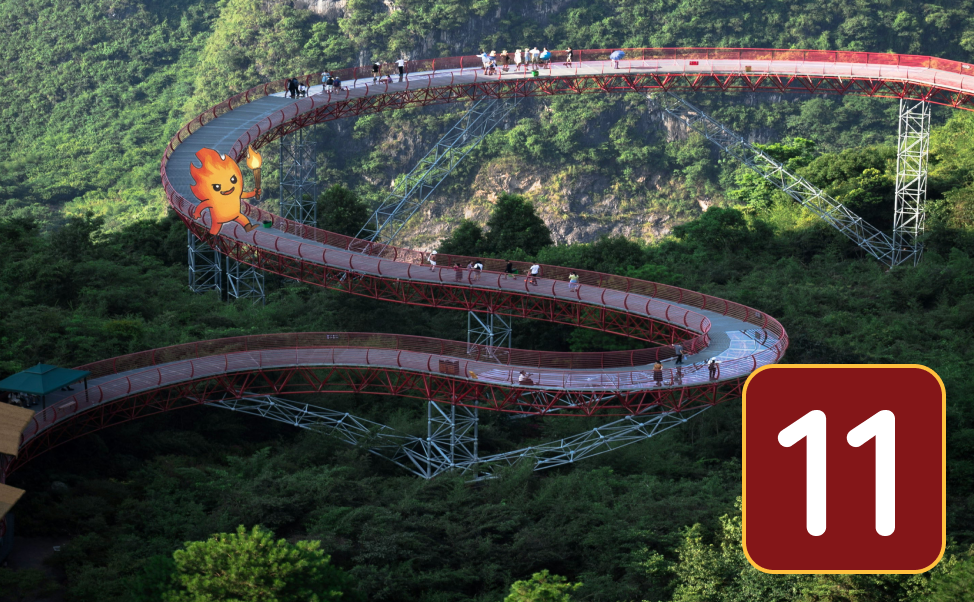
Have you ever looked at a massive concrete bridge and thought, “That’s basically rock, it’s invincible”?
Concrete is generally a firesafe material:
“Concrete and concrete products are fire resistant. Concrete does not burn and it does not emit any toxic fumes when affected by fire. Concrete is inert and in the majority of applications, can be described as virtually fireproof.”
— Wildfires and What They Mean for You | How Concrete Can Help | Intelligent Concrete
But, while it doesn’t burn, concrete is not impervious to fire. [Concrete … impervious … get it? 😛] When concrete is exposed to high temperatures, it doesn’t just heat up, it begins to change at the molecular level.
The intense heat of a wildfire can turn a solid structure into a safety hazard.
Let’s look at the Secret Life of Steel and Stone.
Sweating Concrete
Concrete isn’t as solid as you think. It’s actually a composite of cement, aggregates (sand and gravel), and water. When it’s first made, a chemical reaction called hydration locks the water into the structure to give it strength.
Fire essentially “dehydrates” the stone. At a molecular level, the heat reverses the process that made the concrete strong in the first place: At 300°F, the internal water “sweats” out, micro-cracks form, and the concrete begins to weaken. At 800°F, the cement paste — the glue holding the rocks together — begins to break down. At 1,000°F+, the structural integrity is effectively gone.
(Pro tip: The oven in your kitchen tops out at 550°F. Wood bursts into flames at 570°F. A wildfire may roar at 2,000°F, it’s really really hot!)
Under Pressure
Because concrete is porous (or should we say, “pervious”? 😉), the water trapped inside turns to steam. If the fire is hot enough, that steam can’t escape fast enough. Pressure builds until chunks of concrete literally explode off the surface. This is called spalling.
(Pro tip: Don’t stand next to concrete if it’s really really hot!)
A Heart of Steel
But what about the rebar inside that cement? The heart of steel that carries all the weight?
Well, that steel is heating up, too. At 700°F, it begins to lose its temper. By 1,000°F, it can carry less than 60% of its designed weight.
(Pro tip: Don’t stand on that bridge if it’s really really hot!)
The Invisible Sag
As the steel heats up, it softens, and starts to stretch and sag. Once steel sags and then cools down, it stays in that new, weakened shape. After a fire, that bridge might look perfectly fine, but structurally be bent out of shape and about as reliable as a wet noodle.
(Pro tip: If the engineers say it isn’t safe, really really believe them.)
What can you do?
BEFORE the fire: Use fire-rated materials for hardscaping and home construction, particularly for roofs and areas within 5 feet of your home.
DURING the fire: Follow official evacuation routes strictly, they may be directing you around unsafe overpasses, compromised bridges, and other hazards.
AFTER the fire: Stay away from scorched concrete walls or chimneys, they may be unstable. If a structure has been exposed to high heat, assume it is unsafe until a professional inspection clears it.
RIGHT NOW: Make a donation to help Creative Crisis Leadership turn complex science into simple, life-saving knowledge!
Sources
- Wildfires and What They Mean for You | How Concrete Can Help | Intelligent Concrete
- Alhamad, Amjad, Sherif Yehia, Éva Lublóy, and Mohamed Elchalakani. “Performance of different concrete types exposed to elevated temperatures: a review.” Materials 15, no. 14 (2022): 5032.
- FiRE!!! and concrete | Tyler Ley
- Spalling of Concrete in a Fire | Tyler Ley
0 Comments