
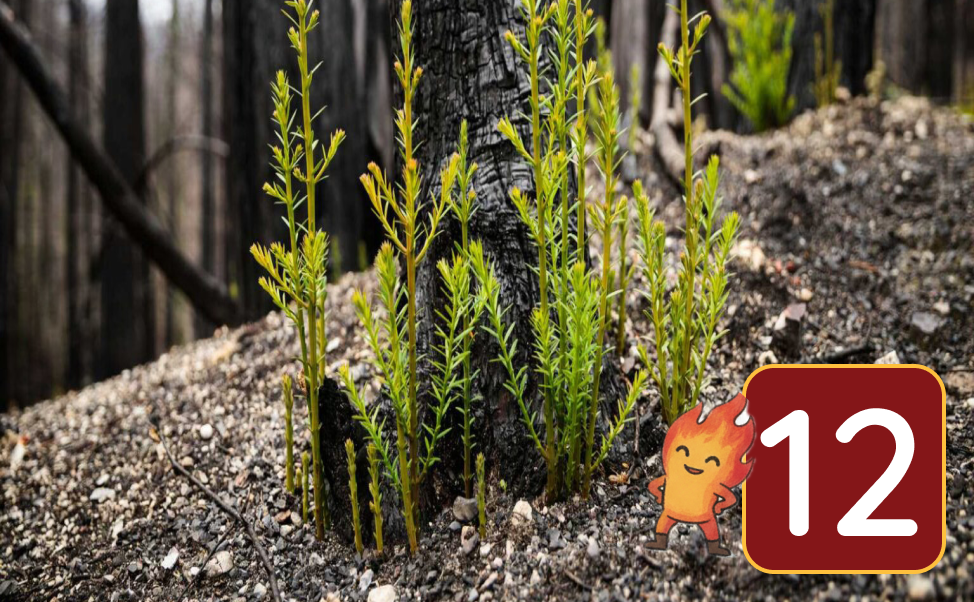
While humans view wildfire as a purely destructive force to be stopped at all costs, many of our forest neighbors can’t live without it. For “pyrophilic” species, a total ban on fire isn’t a safety measure — it’s an extinction event.
To understand the forest’s needs, let’s hear what its inhabitants might have to say about a total ban on wildfire.
THE DAILY DUFF — The stuff you need to read
SACRAMENTO — In a resin-scented showdown yesterday, the forest took to the streets to protest the proposed “No More Wildfire” bill. Thousands of species gathered for a Pro-Fire rally at the Capitol, arguing that for them, fire isn’t a disaster — it’s a life-giving necessity.
The air buzzed with insects and rustled with needles as pyrophiles (fire-lovers) from every corner of the state demanded their right to burn. The protest centered on a single, vital truth: Many species are fire-dependent. Without the heat of a blaze, they cannot survive.
A Demand for Reproductive Rights
The morning’s energy peaked when a tall, slender Lodgepole pine, who requested anonymity for fear of pruning, spoke out with visible passion. “Fire is life,” the pine hissed through its needles. “I, and my fellow pyrophiles, need heat to reproduce. We demand the right to burn!”
The crowd erupted into a rhythmic clashing of branches as the Society of Serotinous Plants stepped forward to explain the biological stakes. A spokeslimb noted that for members like the Lodgepole, seeds are held “hostage” in resin-sealed cones. Without the intense heat of a wildfire to melt that wax, the seeds remain trapped indefinitely. Only fire, they argued, triggers the “seed rain” necessary to colonize the fresh, nutrient-rich ash left in a fire’s wake.
The Sexy Side of Smoke
Nearby, a group of beetles held up a sign, “SMOKE and ASH are SEXY.” Firechaser beetles mate exclusively in smoke and lay eggs in scorched wood. Their spokesbug explained that their infrared sensors allow them to detect a fire as far as 30 miles away.
Overhead, a wing of woodpeckers trailed banners saying, “BURNS are AFFORDABLE HOUSING.” Black-backed woodpeckers use the scorched snags to build nests free from the tree’s sticky, defensive sap.
A Call for Balance
The crowd fell silent as Dr. Venerable Oak took the podium. In a voice like shifting tectonic plates, he explained that fire is the forest’s cleaning and catering service. “Fire takes out the garbage,” he boomed. “It clears the dead wood that chokes our soil. Through mineralization, fire converts waste into vitamins, including potassium, calcium, and magnesium. It releases nitrogen and carbon back into the earth so all our fire-following siblings can carpet the ground in green once more.”
He concluded with an appeal for inclusiveness and unity, “We are in the forest together. To survive, we must respect and care for each other. There must be balanced fire and forest management, a total ban will be the death of us all.”
Despite a group of counter-protesters wearing “Smokey Bear” hats and waving fire extinguishers, the Pro-Fire rally remained peaceful. As the sun set, the message was clear: Fire is a destructive force, but for the forest, it is also a force of life. To ban it entirely is to ban the future of the ecosystem.
What can you do?
BEFORE the fire: Support expert-controlled burns and healthy fire ecology to manage fire risk and encourage biodiversity.
DURING the fire: Stay safe.
AFTER the fire: Celebrate regrowth, plant native species, and watch nature’s magic. Avoid crushing delicate new life with renegade trails through burned areas.
RIGHT NOW: Make a donation to help Creative Crisis Leadership turn complex science into simple, life-saving knowledge!
Sources
- The Ecological Benefits of Fire | National Geographic
- How Does Wildfire Affect Soil and Vegetation? | Western Fire Chiefs Association
- Science: Wildfire Impacts | California Department of Fish and Wildfire
- Wildfire Benefits Many Bird Species | Audubon
- Fire Effects Information System | USDA Forest Service
Stay Safe and Be Curious this Holiday Season!
0 Comments