
Blog
What’s on our minds
We share what we learn and what we’re doing so that others can learn from us and we can learn from others. Comments welcome!
On the Road Again: Come play with us!
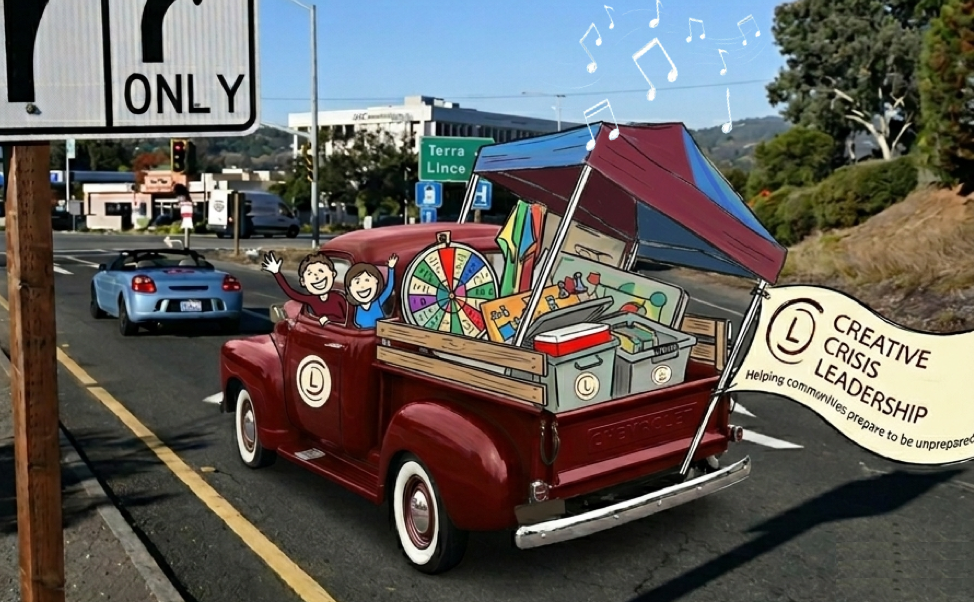
We love the careful thinking and creative design work that goes into every game we build. But nothing compares to the smiles, laughter, and “Aha!” moments that happen when those games finally hit the ground.
Our team is hitting the road to share the fun. We’d love for you to join us!
Public Preparedness Fairs
Sonoma County Wildfire & Earthquake Expo
WHEN: Sunday, April 26 | 10:00 am – 4:00 pm
WHERE: Sonoma County Fairgrounds, Santa Rosa CA
WHAT: We’re bringing Ember Dodge: Household to help families build wildfire resilience in Sonoma County.
Solano County Wildfire Community Preparedness Day
WHEN: Saturday, May 2 | 10:00 am – 2:00 pm
WHERE: Vallejo Ferry Terminal Parking Lot, Vallejo CA
WHAT: We’re bringing Ember Dodge: Household to help families build wildfire resilience in Solano County.
Neighborhood Events
Aldercroft Heights Firewise BBQ
WHEN: Saturday, May 30 | Noon – 4:00 pm
WHERE: Aldercroft Heights CA
WHAT: A special session for Ember Dodge: Neighborhood. We’re helping Aldercroft Heights residents build community and wildfire resilience, one move at a time.
Conferences & Workshops
2026 Natural Hazards Workshop: Game Night
WHEN: Sunday, June 14 | 7:00 pm – 8:30 pm
WHERE: Omni Interlocken, Broomfield CO
WHAT: We’ll be demonstrating the power of game-based learning to the disaster research community using Ember Dodge: Neighborhood.
2026 Creative Problem Solving Institute (CPSI) Conference: Workshop
WHEN: Wednesday, June 17 | 2:00 pm – 3:30 pm
WHERE: Buffalo State University, Buffalo NY
WHAT: A high-energy Design Studio! We’re challenging the hyper-creative CPSI attendees to see how many Mini Games we can generate together in just 90 minutes.
Can’t make it to these events? Don’t worry! We’ll soon be scheduling our own dedicated sessions to test our latest builds, and make our games available to more communities.
Interested in playing with us? Get in touch — we’d love to hear from you.
Thank you for your ongoing support and for being part of our mission to make the world more resilient, one community and game at a time!
Moving from “Someone should do something” to “I can do something”
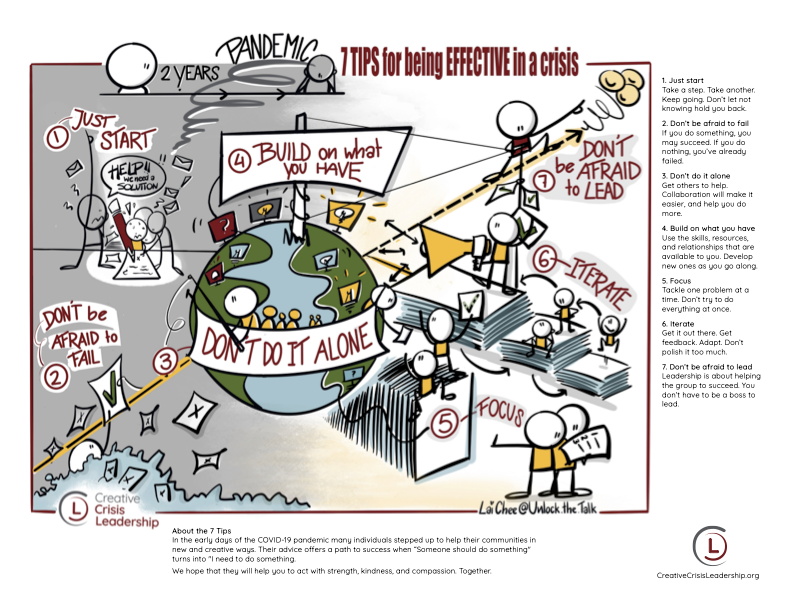
In tribute to my family in Minneapolis, we are sharing our “7 Tips for Being Effective in a Crisis.” These insights come from our study of individuals who stepped up during the COVID-19 pandemic to help their communities.
We hope they inspire others to help their neighbors with grace, caring, and dignity — turning “someone should do something” into compassionate action.
May we all embrace “Minnesota nice.”
— Susanne
Help wanted: Be part of the Wildfire Fun Team!
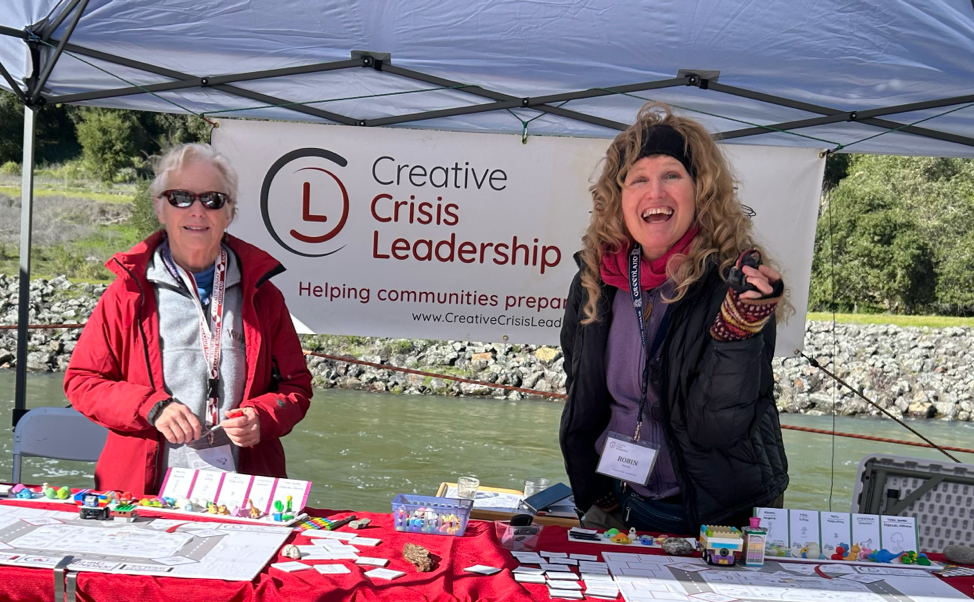
We are looking for a volunteer or two to help us run the Wildfire Board Game at some upcoming events:
- March 7: Steelhead Festival (Lake Sonoma Recreation Area)
- April 26: Sonoma County Wildfire & Earthquake Expo (Santa Rosa)
- May 2: Solano County Preparedness Fair (Location TBD — last time we attended it was at Lake Solano County Park)
We’ll make sure it’s a smooth (and free!) experience: We provide full training on the game, and can reimburse travel mileage, plus lodging and meals if the event is more than 50 miles from home.
If you are interested, or know someone who is, please get in touch. Anyone with a background in wildfire preparedness would be a natural. Having a Spanish speaker on the team would be a huge win for reaching the whole community.
Have fun while helping communities to become more wildfire resilient!
Curiosity #12: A Burning Need — Why the Forest is Pro-Fire
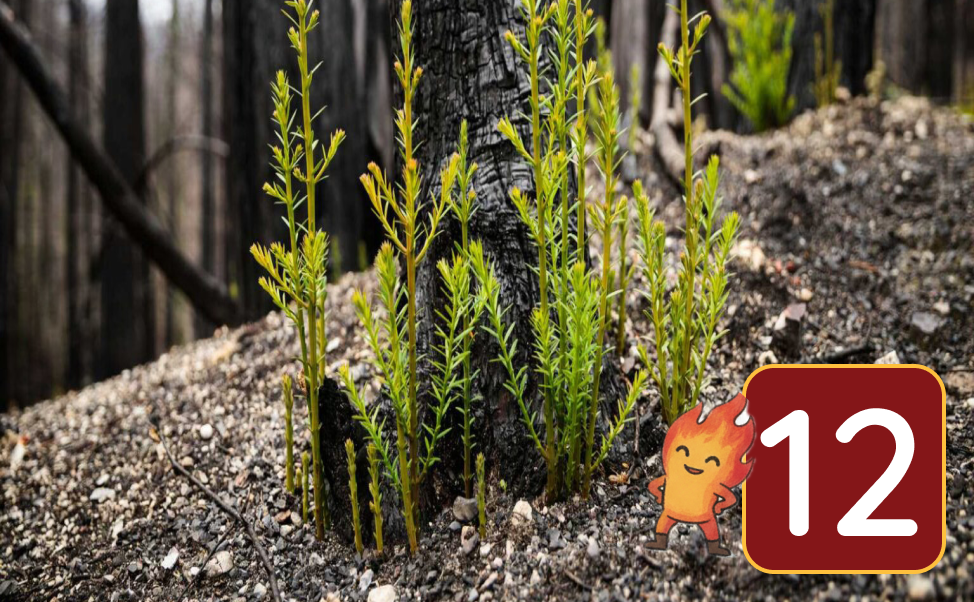
While humans view wildfire as a purely destructive force to be stopped at all costs, many of our forest neighbors can’t live without it. For “pyrophilic” species, a total ban on fire isn’t a safety measure — it’s an extinction event.
To understand the forest’s needs, let’s hear what its inhabitants might have to say about a total ban on wildfire.
THE DAILY DUFF — The stuff you need to read
SACRAMENTO — In a resin-scented showdown yesterday, the forest took to the streets to protest the proposed “No More Wildfire” bill. Thousands of species gathered for a Pro-Fire rally at the Capitol, arguing that for them, fire isn’t a disaster — it’s a life-giving necessity.
The air buzzed with insects and rustled with needles as pyrophiles (fire-lovers) from every corner of the state demanded their right to burn. The protest centered on a single, vital truth: Many species are fire-dependent. Without the heat of a blaze, they cannot survive.
A Demand for Reproductive Rights
The morning’s energy peaked when a tall, slender Lodgepole pine, who requested anonymity for fear of pruning, spoke out with visible passion. “Fire is life,” the pine hissed through its needles. “I, and my fellow pyrophiles, need heat to reproduce. We demand the right to burn!”
The crowd erupted into a rhythmic clashing of branches as the Society of Serotinous Plants stepped forward to explain the biological stakes. A spokeslimb noted that for members like the Lodgepole, seeds are held “hostage” in resin-sealed cones. Without the intense heat of a wildfire to melt that wax, the seeds remain trapped indefinitely. Only fire, they argued, triggers the “seed rain” necessary to colonize the fresh, nutrient-rich ash left in a fire’s wake.
The Sexy Side of Smoke
Nearby, a group of beetles held up a sign, “SMOKE and ASH are SEXY.” Firechaser beetles mate exclusively in smoke and lay eggs in scorched wood. Their spokesbug explained that their infrared sensors allow them to detect a fire as far as 30 miles away.
Overhead, a wing of woodpeckers trailed banners saying, “BURNS are AFFORDABLE HOUSING.” Black-backed woodpeckers use the scorched snags to build nests free from the tree’s sticky, defensive sap.
A Call for Balance
The crowd fell silent as Dr. Venerable Oak took the podium. In a voice like shifting tectonic plates, he explained that fire is the forest’s cleaning and catering service. “Fire takes out the garbage,” he boomed. “It clears the dead wood that chokes our soil. Through mineralization, fire converts waste into vitamins, including potassium, calcium, and magnesium. It releases nitrogen and carbon back into the earth so all our fire-following siblings can carpet the ground in green once more.”
He concluded with an appeal for inclusiveness and unity, “We are in the forest together. To survive, we must respect and care for each other. There must be balanced fire and forest management, a total ban will be the death of us all.”
Despite a group of counter-protesters wearing “Smokey Bear” hats and waving fire extinguishers, the Pro-Fire rally remained peaceful. As the sun set, the message was clear: Fire is a destructive force, but for the forest, it is also a force of life. To ban it entirely is to ban the future of the ecosystem.
What can you do?
BEFORE the fire: Support expert-controlled burns and healthy fire ecology to manage fire risk and encourage biodiversity.
DURING the fire: Stay safe.
AFTER the fire: Celebrate regrowth, plant native species, and watch nature’s magic. Avoid crushing delicate new life with renegade trails through burned areas.
RIGHT NOW: Make a donation to help Creative Crisis Leadership turn complex science into simple, life-saving knowledge!
Sources
- The Ecological Benefits of Fire | National Geographic
- How Does Wildfire Affect Soil and Vegetation? | Western Fire Chiefs Association
- Science: Wildfire Impacts | California Department of Fish and Wildfire
- Wildfire Benefits Many Bird Species | Audubon
- Fire Effects Information System | USDA Forest Service
Stay Safe and Be Curious this Holiday Season!
Curiosity #11: Wildfire and the Secret Life of Steel and Stone
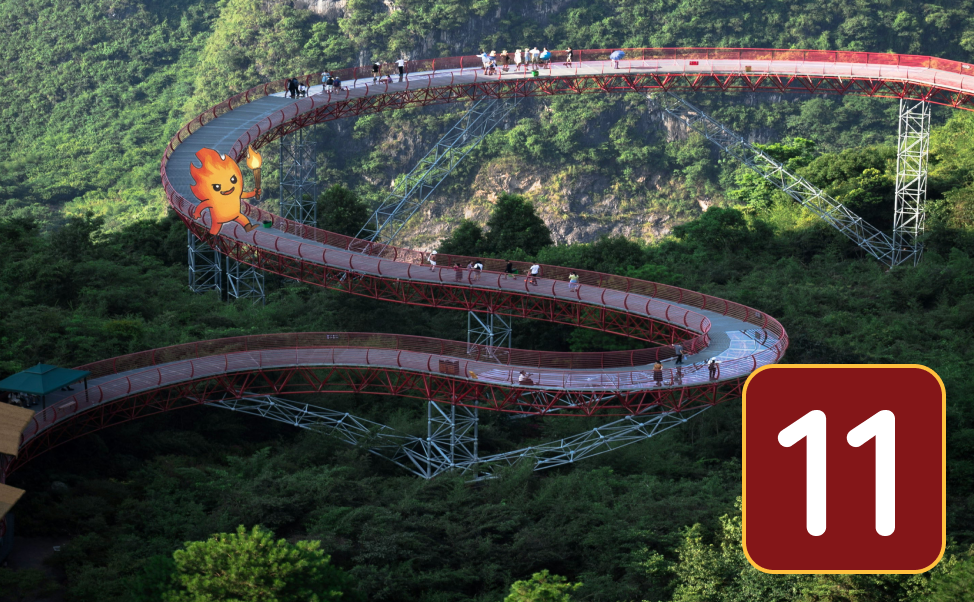
Have you ever looked at a massive concrete bridge and thought, “That’s basically rock, it’s invincible”?
Concrete is generally a firesafe material:
“Concrete and concrete products are fire resistant. Concrete does not burn and it does not emit any toxic fumes when affected by fire. Concrete is inert and in the majority of applications, can be described as virtually fireproof.”
— Wildfires and What They Mean for You | How Concrete Can Help | Intelligent Concrete
But, while it doesn’t burn, concrete is not impervious to fire. [Concrete … impervious … get it? 😛] When concrete is exposed to high temperatures, it doesn’t just heat up, it begins to change at the molecular level.
The intense heat of a wildfire can turn a solid structure into a safety hazard.
Let’s look at the Secret Life of Steel and Stone.
Sweating Concrete
Concrete isn’t as solid as you think. It’s actually a composite of cement, aggregates (sand and gravel), and water. When it’s first made, a chemical reaction called hydration locks the water into the structure to give it strength.
Fire essentially “dehydrates” the stone. At a molecular level, the heat reverses the process that made the concrete strong in the first place: At 300°F, the internal water “sweats” out, micro-cracks form, and the concrete begins to weaken. At 800°F, the cement paste — the glue holding the rocks together — begins to break down. At 1,000°F+, the structural integrity is effectively gone.
(Pro tip: The oven in your kitchen tops out at 550°F. Wood bursts into flames at 570°F. A wildfire may roar at 2,000°F, it’s really really hot!)
Under Pressure
Because concrete is porous (or should we say, “pervious”? 😉), the water trapped inside turns to steam. If the fire is hot enough, that steam can’t escape fast enough. Pressure builds until chunks of concrete literally explode off the surface. This is called spalling.
(Pro tip: Don’t stand next to concrete if it’s really really hot!)
A Heart of Steel
But what about the rebar inside that cement? The heart of steel that carries all the weight?
Well, that steel is heating up, too. At 700°F, it begins to lose its temper. By 1,000°F, it can carry less than 60% of its designed weight.
(Pro tip: Don’t stand on that bridge if it’s really really hot!)
The Invisible Sag
As the steel heats up, it softens, and starts to stretch and sag. Once steel sags and then cools down, it stays in that new, weakened shape. After a fire, that bridge might look perfectly fine, but structurally be bent out of shape and about as reliable as a wet noodle.
(Pro tip: If the engineers say it isn’t safe, really really believe them.)
What can you do?
BEFORE the fire: Use fire-rated materials for hardscaping and home construction, particularly for roofs and areas within 5 feet of your home.
DURING the fire: Follow official evacuation routes strictly, they may be directing you around unsafe overpasses, compromised bridges, and other hazards.
AFTER the fire: Stay away from scorched concrete walls or chimneys, they may be unstable. If a structure has been exposed to high heat, assume it is unsafe until a professional inspection clears it.
RIGHT NOW: Make a donation to help Creative Crisis Leadership turn complex science into simple, life-saving knowledge!
Sources
- Wildfires and What They Mean for You | How Concrete Can Help | Intelligent Concrete
- Alhamad, Amjad, Sherif Yehia, Éva Lublóy, and Mohamed Elchalakani. “Performance of different concrete types exposed to elevated temperatures: a review.” Materials 15, no. 14 (2022): 5032.
- FiRE!!! and concrete | Tyler Ley
- Spalling of Concrete in a Fire | Tyler Ley
Stay Safe and Be Curious this Holiday Season!