
Blog
What’s on our minds
We share what we learn and what we’re doing so that others can learn from us and we can learn from others. Comments welcome!
Curiosity #4: Wildfire, Part II: Here Come the Flows!

The flames are out, the firefighters have gone home, the drama is over. Or is it?
If you live downhill or downstream from a wildfire burn area, you have a front-row reservation for the riveting sequel:
🔥 Wildfire, Part II: Here Come the Flows! 🌊
Introducing Heavy Rain!
In our last episode, Evil Wizard Wildfire cursed the burn scar with Hydrophobia. The intense heat forced waxy substances deep into the soil, creating a water-repellent layer—a waxy second skin.
Act 1: Flash Flood Fury!
Enter Heavy Rain. She arrives at the burn scar full of hope, expecting to be embraced and foster new life. But the cursed ground rejects her! Humiliated and furious, she sends water cascading downhill. Within minutes, a flash flood is surging through canyons and down hillsides, headed right for the innocent village below.
Will the villagers, secure in having survived the fire, recognize this new danger?
Act 2: Debris Flow Demolition!
Not satisfied with mere flooding, Heavy Rain combines water with ash and dirt to form a thick heavy sludge. When this still doesn’t break through the hydrophobic barrier, she launches the wet-cement-like mass downhill. With the density of a battering ram, it snaps trees like toothpicks, and sweeps up boulders and everything else in its path. The resulting debris flow hurtles toward the innocent village at speeds of up to 30 miles per hour.
Will the village and all its history escape being carried away?
Act 3: Small, But Mighty Miracles!
As seasons pass, the villagers continue to shore up hillsides and build defensive barriers. Whenever Heavy Rain threatens, they work together to fill sandbags and barricade their homes. After living in fear for five years, they learn that the curse has miraculously been lifted: Hydrophobia is cured!
We finally meet the tiny plants and microbes who worked their secret magic to break down the waxy hydrophobic layer, and make the ground open to water’s embrace once again!
🔥 Wildfire, Part II: Here Come the Flows! 🌊
Showing soon in select watersheds!
What can you do?
BEFORE the fire: Keep drainage channels and culverts clear of debris. Consider flood insurance — standard homeowner policies usually do not cover flood or mudflow damage.
DURING the fire: Do a rain dance — rain will aid firefighting efforts. If rains do come, stay alert to possible flash floods or debris flows from burned-out areas uphill or upstream from you — even if the fire is still burning somewhere.
AFTER the fire: Know your geography. If you are downhill or downstream from steep terrain that recently burned, you are in a flood zone, even if you weren’t before. Identify high ground and evacuation routes that don’t cross low-lying washouts.
RIGHT NOW: Make a donation to help Creative Crisis Leadership turn complex science into simple, life-saving knowledge!
Sources
- Burn Scar Flash Flood & Debris Flow Risks | National Weather Service
- Burned Watershed Geohazards | California Dept. of Conservation
- Flood After Fire | US Army Corps of Engineers
- What should I know about wildfires and debris flows? | U.S. Geological Survey
- Soil Erosion Control after Wildfire | Tom DeGomez, University of Arizona Cooperative Extension
Stay Safe and Be Curious this Holiday Season!
Curiosity #3: Wildfire, MAW – Master of Alchemical Wizardry, Soil Specialist
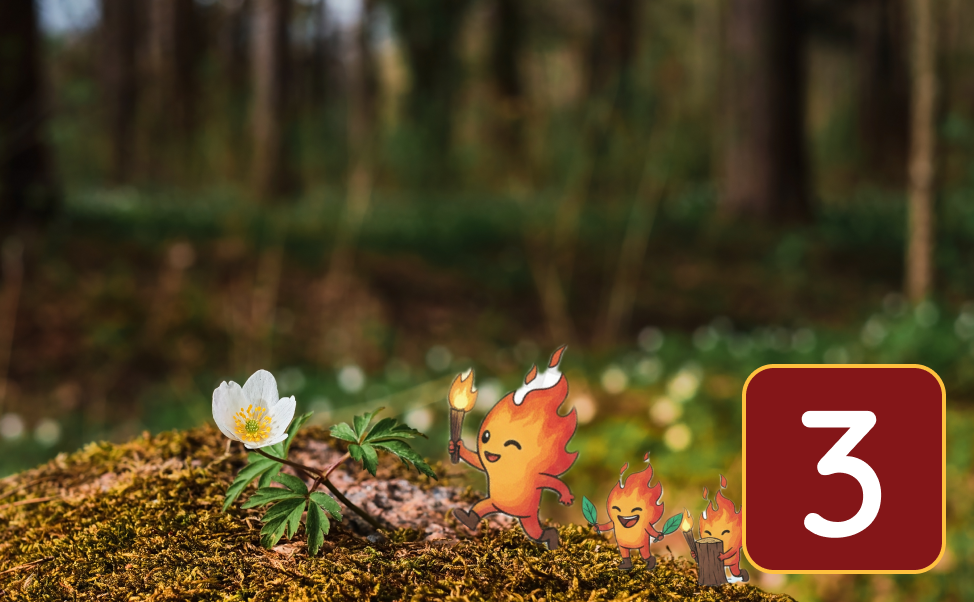
Did you know that Wildfires are all NSA (Nature’s School of Alchemy) graduates? Not only can they use heat to transform matter and oxygen into ash and smoke, they can perform amazing transmutation tricks with dirt and soil!
Transmutation #1: Waterproofing dirt
You’d think after a raging wildfire, the ground would be parched and love a good drink of water, right? Wrong. In a twist worthy of a magic trick, a high-intensity fire can actually turn the soil completely waterproof!
Here’s how that happens: Plants are full of natural oils, resins, and waxes. When they burn, these compounds vaporize into a gas. This gas gets pushed down into the soil, away from the heat. As soon as it hits a cooler layer of dirt underground, it condenses and hardens, coating the soil particles in a waxy, water-repellent layer, creating so-called hydrophobic soil. Basically, the ground puts on a raincoat!
Transmutation #2: Slip ‘n Slide
Now, the underground dirt is bone dry and shielded. But the top layer? That gets nice and soggy with a good rain: Muddy top layer meets waxy bottom layer, and … boom, instant Slip ‘n Slide!
Transmutation #3: Shocking Nutrients
When wood and leaves burn, carbon floats away, but minerals like nitrogen, phosphorus, and potassium stick around. You might think this would be a miracle fertilizer, but it can actually be too much of a good thing. This “nutrient shock” can burn the roots of sensitive native seedlings. Even worse, because there are no plants left to drink up these nutrients, the first rain washes them straight into local streams, causing algal blooms that can choke out fish and contaminate water supplies miles downstream.
Transmutation #4: pH Flip Flop
Have you ever heard of “potash”? It’s an old word for potassium salts, historically made by soaking wood ash in water. Ash is highly alkaline (basic), but forest soils — especially under pines — are usually acidic. One wildfire, and suddenly the soil is a weed-friendly party zone, while native plants get locked out. Nature’s chemistry upended!
What can you do?
BEFORE the fire: Clear defensible space around your home, and use fire-resistant materials and plants in your landscaping, to keep fire from playing in your dirt.
DURING the fire: Beware of walking or driving on dirt in a burned-out area, especially if there’s water from rain or firefighting efforts around that may create sneaky Slip ‘n Slides.
AFTER the fire: Loosen the top 2–6 inches of soil in any burnt areas around your home or garden, breaking up the waxy, water-repellent layer. Consider having garden soil tested for pH levels and alkalinity, and use soil amendments if needed.
RIGHT NOW: Make a donation to help Creative Crisis Leadership turn complex science into simple, life-saving knowledge!
Sources
- How Does Wildfire Affect Soil and Vegetation? | Western Fire Chiefs Association
- How Does Wildfire Impact Soil Health? | Fire Safe Sonoma
- Vahedifard, Farshid, Masood Abdollahi, Ben A. Leshchinsky, Timothy D. Stark, Mojtaba Sadegh, and Amir AghaKouchak. “Interdependencies between wildfire‐induced alterations in soil properties, near‐surface processes, and geohazards.” Earth and Space Science 11, no. 2 (2024): e2023EA003498.
Stay Safe and Be Curious this Holiday Season!
Curiosity #2: Cooking Up a FireStorm–A 4-step Recipe for Wildfire Spread
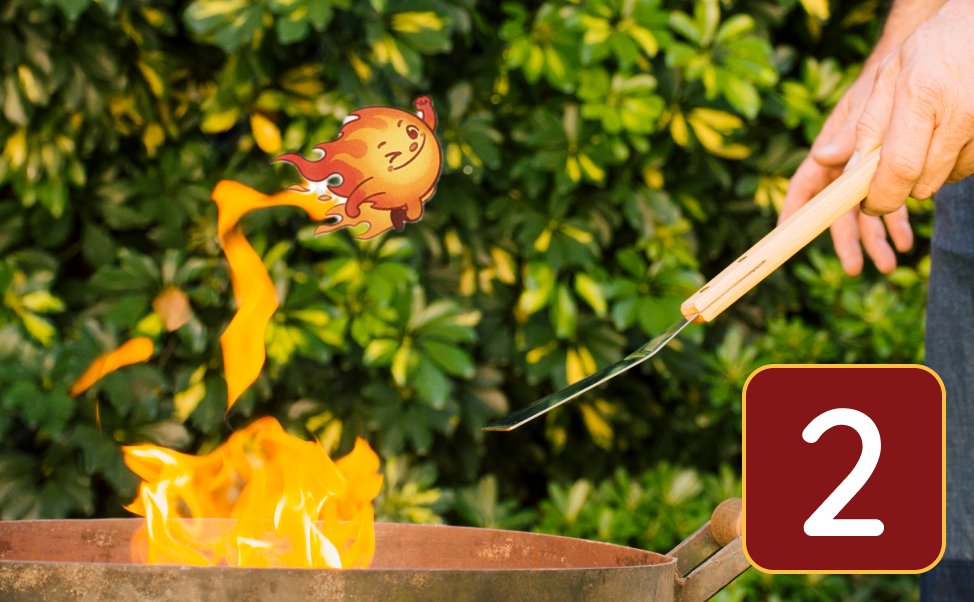
How do we spread a “yummy” destructive wildfire? We begin with good ingredients. Starting with the basic Fire Triangle of Fuel, Heat, and Oxygen, we then stir in appropriate Weather and favorable Topography to create a powerful wildfire.
Recipe for a Basic Fire
Ingredients
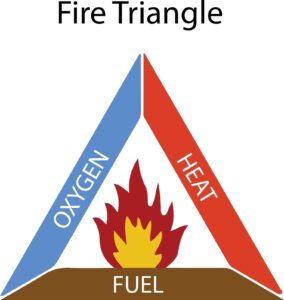
The fire triangle of Fuel, Heat, and Oxygen.
☐ Fuel: Anything that can burn: trees, dry grass, houses, or even the gases released from heating wood.
Note: Start with kindling or nice field of dried grass. Variations might include flammable mulch, dried-out wood of old porches and fences, or parched brush during a drought.
☐ Heat: A burning match, lightning, or a tossed cigarette, anything that provides the energy needed to ignite the fuel).
☐ Oxygen: The air we breathe—about 16% concentration is needed to sustain a flame.
Note: A slow-fire alternative is smouldering fires that need much less oxygen. See Curiosity #1: Just when you thought the fire was dead and buried …
Preparation
Combine all ingredients.
It is important to include all three ingredients of this Fire Triangle. Using firebreaks to remove fuel, dropping water on the fire to remove heat, or smothering the fire with heavy foam to remove oxygen can cause your fire to fail and die out.
Recipe for a Wildfire
Ingredients
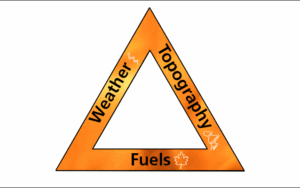
The Wildfire triangle of Fuels, Weather, and Topography.
☐ 1 serving Basic Fire, perhaps set in a remote wooded area. Be sure you have ample fuels to keep feeding the fire.
☐ Weather: Use dry, hot weather with a good strong wind to bring a fresh supply of oxygen to the fire, push the fire towards new fuel sources, and blow embers miles downwind to ensure a good spread.
☐ Topography: Start with favorable terrain, such as at the bottom of a steep slope. This way the fire can heat up the uphill fuels with rising hot air, and create spot fires with upward drafts.
Preparation
Step 1. Conduction: The Slow Creep
You can transfer heat through conduction — direct solid-to-solid contact – no need for actual flames to spread directly. For instance, you can ignite insulation or framing inside a house, by burning vegetation – trees, bushes, plants – within 5 feet of your house, what is called Zone Zero, and letting the process of conduction pass heat through the roof and exterior walls.
Step 2. Convection: The Skyward Surge
For a visually dramatic and powerful way of spreading your wildfire, use convection – a process in which the air directly above the fire heats up, becoming lighter and rising rapidly. This creates a massive column of hot gases and smoke, much like a super-powered chimney, lifting embers (also called “firebrands”) high up into the atmosphere to drop miles downwind, igniting new fires. This is the best way to have your wildfire jump highways, canyons, and massive firebreaks that get in the way of your beautiful fire’s terrifyingly unpredictable path.
Step 3. Radiation: The Invisible Roaster
To spread your wildfire quickly, you can use thermal radiation to “pre-cook” everything in a wide radius to prepare it for ignition. The intense radiant heat of a wildfire travels in invisible waves, pre-heating and drying out fuel before the flames even arrive. A great use of radiation is to turn green bushes into explosive tinder that your wildfire can just eat right up.
Step 4. Direct Flame Contact: The Classic Burn
Now you’re ready for the last and simplest step – spreading your wildfire through direct flame, when flames physically touch and ignite new fuel. By now, igniting fuel is easy, because you’ve used conduction and radiant heat to prepare your fuel, and skyward convection to spread embers far downwind.
What can you do?
If you don’t really want to feast on a good wildfire, you can keep your home safe for less destructive meals.
BEFORE the fire: Keep Zone Zero clear of flammables to prevent conduction from igniting fuel inside your home and direct flames from igniting fuel outside your home. Install fire-safe screening on all attic, foundation, and roof vents to block wind-borne embers (firebrands from convection) from entering your home and igniting.
DURING the fire: Be sure to close all windows and doors to prevent embers (and ash, and flame, and firefighting water and foam) from getting into your precious home.
AFTER the fire: Immediately check all sides of your house, roof and attic for smoldering debris after the fire has passed, as materials ignited by conduction can take time to show a visible flame, and embers, flown in via convection, can re-ignite as much as three days after landing.
RIGHT NOW: Make a donation to help Creative Crisis Leadership turn complex science into simple, life-saving knowledge!
Sources
- Wildland Fire Behavior (U.S. National Park Service)
- Protecting structures from wildfire embers and fire exposures
Stay Safe and Be Curious this Holiday Season!
Curiosity #1: Just when you thought the fire was dead and buried
Ever think a wildfire is really out? You may need to think again: Meet the Zombie Fire! (Also known as a holdover, duff, root, or sleeper fire.)
The Zombie Fire isn’t the flaming inferno you see on the news. Instead, it’s a sneaky smouldering monster creeping underground, looking for a way to break free.
You see, the ground you walk on may not be as fireproof as you believe. Think about the last time you enjoyed the nice soft springy surface underfoot as you walked through the woods. That looked like a thin layer of damp moss and thick decaying leaves, right? But that might just have been the top of a deep layer of duff, organic matter tunneled through by everything from earthworms to tree roots to cute little bunny rabbits. This material is packed with carbon, stored there over thousands of years as plants die and decay.
It’s also the Zombie Fire’s favorite food. After fire fighters have killed the surface fire, the Zombie Fire may have burrowed into this organic soil layer, and transformed. In its new form it doesn’t need flames or wind to thrive. It smolders — a slow combustion reaction that happens with limited oxygen and at much lower temperatures — slowly turning that stored carbon into smoke and heat. A Zombie Fire can lurk for months, even years, surviving even under frozen ground. After eating along for miles, it can spring forth from its organic grave, giving birth to a new wildfire horror far from where it was first buried.
And that can be very bad: The 2025 Palisades fire was determined to result from a Zombie Fire!
Here’s the mind-blowing part: Per unit area, smoldering fire releases significantly more carbon into the atmosphere than flaming fire. A fast-moving, high-intensity surface fire burns the above-ground material quickly. But the slow, creeping smolder consumes the deep duff layer, releasing the centuries of stored carbon into the air. This makes Zombie Fires a feeder of climate change, not just a local hazard: The carbon released contributes to further warming, which in turn dries out the duff, preparing fuel for future Zombie Fires.
What can you do?
BEFORE the fire: Clear defensible space around your home, making sure to keep deep layers of flammable organic materials like mulch and leaves away from your foundation.
DURING (and after) the fire: Be cautious when walking on burned ground. Smoldering root systems and deep voids can lead to unstable soil and collapse, creating hidden traps disguised as solid ground.
AFTER the fire: Report any persistent, localized smoke or steam rising from the ground, as this could indicate a burrowing Zombie Fire that needs professional attention.
RIGHT NOW: Make a donation today to help Creative Crisis Leadership turn complex science into simple, life-saving knowledge!
Sources
- How This Fire Burns Underground (YouTube short) | Dr. Ben Miles
- Overwintering Fires, British Columbia Wildfire Service, June 2024
- How did the smouldering root fire on New Years Eve turn into the deadly 2025 LA fires? | CTIF
- Rein, Guillermo, and Xinyan Huang. “Smouldering wildfires in peatlands, forests and the arctic: Challenges and perspectives.” Current Opinion in Environmental Science & Health 24 (2021): 100296.
Stay Safe and Be Curious this Holiday Season!
Wildfire Curious: Our Gift to You this Giving Tuesday
At Creative Crisis Leadership, our mission is to foster resilient communities and make disaster preparedness fun for everyone. In the spirit of year-end giving and community connection, we are thrilled to launch our 2025 Holiday Calendar:
Inspired by the Danish roots of our founder, Susanne Jul, this annual calendar lets us give something back to our supporters who don’t get to be part of our games and events (yet!). It is our way of expressing sincere appreciation for your support throughout the year.
What to Expect in December
Each of our 12 calendar entries will offer:
👉 Insights: Making complex wildfire-related science accessible so you can take action.
👉 Fun Facts: Engaging facts you can use for holiday small talk, and reduce the fear we might feel about situations that are part of our lives.
How to Play Along
Good News! If you already follow us on LinkedIn or are subscribed to our Mailing list, the fun will come directly to you! All you have to do is open the message!
Need to sign up? Don’t miss out! Follow us on LinkedIn or sign up for our Mailing list to ensure you receive the season’s special fun.
We hope you play along with us this December. And thank you for your support!
Stay Safe and Be Curious this Holiday Season!