
Blog
What’s on our minds
We share what we learn and what we’re doing so that others can learn from us and we can learn from others. Comments welcome!
Curiosity #11: Wildfire and the Secret Life of Steel and Stone
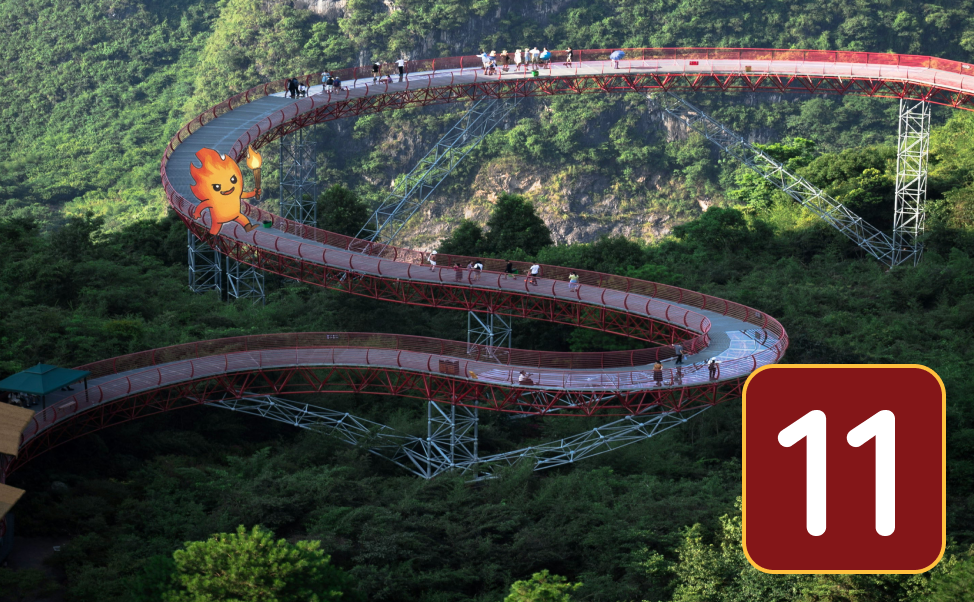
Have you ever looked at a massive concrete bridge and thought, “That’s basically rock, it’s invincible”?
Concrete is generally a firesafe material:
“Concrete and concrete products are fire resistant. Concrete does not burn and it does not emit any toxic fumes when affected by fire. Concrete is inert and in the majority of applications, can be described as virtually fireproof.”
— Wildfires and What They Mean for You | How Concrete Can Help | Intelligent Concrete
But, while it doesn’t burn, concrete is not impervious to fire. [Concrete … impervious … get it? 😛] When concrete is exposed to high temperatures, it doesn’t just heat up, it begins to change at the molecular level.
The intense heat of a wildfire can turn a solid structure into a safety hazard.
Let’s look at the Secret Life of Steel and Stone.
Sweating Concrete
Concrete isn’t as solid as you think. It’s actually a composite of cement, aggregates (sand and gravel), and water. When it’s first made, a chemical reaction called hydration locks the water into the structure to give it strength.
Fire essentially “dehydrates” the stone. At a molecular level, the heat reverses the process that made the concrete strong in the first place: At 300°F, the internal water “sweats” out, micro-cracks form, and the concrete begins to weaken. At 800°F, the cement paste — the glue holding the rocks together — begins to break down. At 1,000°F+, the structural integrity is effectively gone.
(Pro tip: The oven in your kitchen tops out at 550°F. Wood bursts into flames at 570°F. A wildfire may roar at 2,000°F, it’s really really hot!)
Under Pressure
Because concrete is porous (or should we say, “pervious”? 😉), the water trapped inside turns to steam. If the fire is hot enough, that steam can’t escape fast enough. Pressure builds until chunks of concrete literally explode off the surface. This is called spalling.
(Pro tip: Don’t stand next to concrete if it’s really really hot!)
A Heart of Steel
But what about the rebar inside that cement? The heart of steel that carries all the weight?
Well, that steel is heating up, too. At 700°F, it begins to lose its temper. By 1,000°F, it can carry less than 60% of its designed weight.
(Pro tip: Don’t stand on that bridge if it’s really really hot!)
The Invisible Sag
As the steel heats up, it softens, and starts to stretch and sag. Once steel sags and then cools down, it stays in that new, weakened shape. After a fire, that bridge might look perfectly fine, but structurally be bent out of shape and about as reliable as a wet noodle.
(Pro tip: If the engineers say it isn’t safe, really really believe them.)
What can you do?
BEFORE the fire: Use fire-rated materials for hardscaping and home construction, particularly for roofs and areas within 5 feet of your home.
DURING the fire: Follow official evacuation routes strictly, they may be directing you around unsafe overpasses, compromised bridges, and other hazards.
AFTER the fire: Stay away from scorched concrete walls or chimneys, they may be unstable. If a structure has been exposed to high heat, assume it is unsafe until a professional inspection clears it.
RIGHT NOW: Make a donation to help Creative Crisis Leadership turn complex science into simple, life-saving knowledge!
Sources
- Wildfires and What They Mean for You | How Concrete Can Help | Intelligent Concrete
- Alhamad, Amjad, Sherif Yehia, Éva Lublóy, and Mohamed Elchalakani. “Performance of different concrete types exposed to elevated temperatures: a review.” Materials 15, no. 14 (2022): 5032.
- FiRE!!! and concrete | Tyler Ley
- Spalling of Concrete in a Fire | Tyler Ley
Stay Safe and Be Curious this Holiday Season!
Curiosity #10: Caging the Wildfire Dragon
There is a wildfire dragon rampaging through the forest. Dragon Slayers are fighting hard to stop it. But dragons are hard to kill. Battling them can go through many stages.
In the world of wildfires, firefighters have very specific words for the different stages of battling the Dragon. Understanding these terms—Contained, Controlled, and Out—is crucial for managing your expectations and knowing what is safe to do when smoke is in the air.
Stage 1: Contained
The dragon is ferocious. The fearless and valiant dragon slayers are fighting hard, but they just cannot put the powerful beast down. Undeterred, they prudently back off and try to contain the fearsome creature by building a “cage” around it.
A fire is Contained when it is encircled by a fuel break — a strip of land that has been cleared of vegetation and other flammables to slow the fire spread. This break may comprise roads, rivers, or swathes of bare dirt scraped clean by bulldozers.
But a fire may only be partially contained: When you hear a fire is “65% contained,” it doesn’t mean 65% of the fire is out. It means firefighters have created containment lines — fuel-free boundaries — along 65% of the wildfire’s perimeter.
When a wildfire is fully contained, there is a completely closed perimeter of fuel breaks surrounding it. At this stage, there is a “reasonable expectation” that the dragon won’t break out of the cage. But inside that ring? The wildfire is still actively burning. The angry dragon is still raging and could escape.
Stage 2: Controlled
Now that the fearsome beast is fully contained in a cage, the battle-hardened dragon slayers work to beat it back until they can kill it outright, or it starves to death
A fire is Controlled when the containment lines are holding strong, and crews have extinguished every flame, ember, and smoking twig within 300 feet inside the perimeter. The weary dragon is exhausted and is unlikely to escape. The fatiguing dragon slayers heave a sigh of relief, but the dragon is not out yet.
Stage 3: Out
Finally, the starving dragon is weak enough for the dragon slayers to take it on directly. With a final mighty thrust of their lances, they kill it. The wildfire dragon is finally dead!
A fire is Out when there have not been any active flames or smoldering, smoking hotspots for at least 48 hours anywhere inside the perimeter. However, for many wildfires, fire fighters may monitor the burn area for a much longer period of time before they declare that the fire has been fully extinguished and poses no risk of reigniting. In massive wildland fires, crews might patrol the area for weeks until heavy rain or snow guarantees the job is done. Only when the exhausted dragon slayers feel it is safe to put away the lances and go home, do they declare the dragon dead.
Epilogue
But! You know how all horror films end! The dragon may still come back as a zombie fire and live to burn another day. Under certain conditions, heat can burrow deep into root systems or peat soil. There, underground, the wildfire dragon survives, insulated by the earth, smoldering quietly while snow falls above it, patiently awaiting its chance to return. Bwaa hah hah…
What can you do?
- BEFORE the fire: Sign up for local emergency alerts, and learn the terminology so that you understand updates and can make good decisions when the time comes.
- DURING the fire: Monitor and follow directions from official incident maps and sources of information.
- AFTER the fire: Beware of burned land even after the fire is “Out.” Root systems may still be weak or smoldering deep underground.
RIGHT NOW: Make a donation to help Creative Crisis Leadership turn complex science into simple, life-saving knowledge!
Sources
- NWCG Glossary of Wildland Fire, PMS 205 | National Wildfire Coordinating Group
- How Authorities Define Fire ‘Containment’ and ‘Control’ | TIME
- What Does Wildfire Containment Mean & How is it Measured? | WFCA
- Wildfire “Containment” Explained | RedZone
Stay Safe and Be Curious this Holiday Season!
Curiosity #9: Power Lines, Wildfire, and the Race to Glory
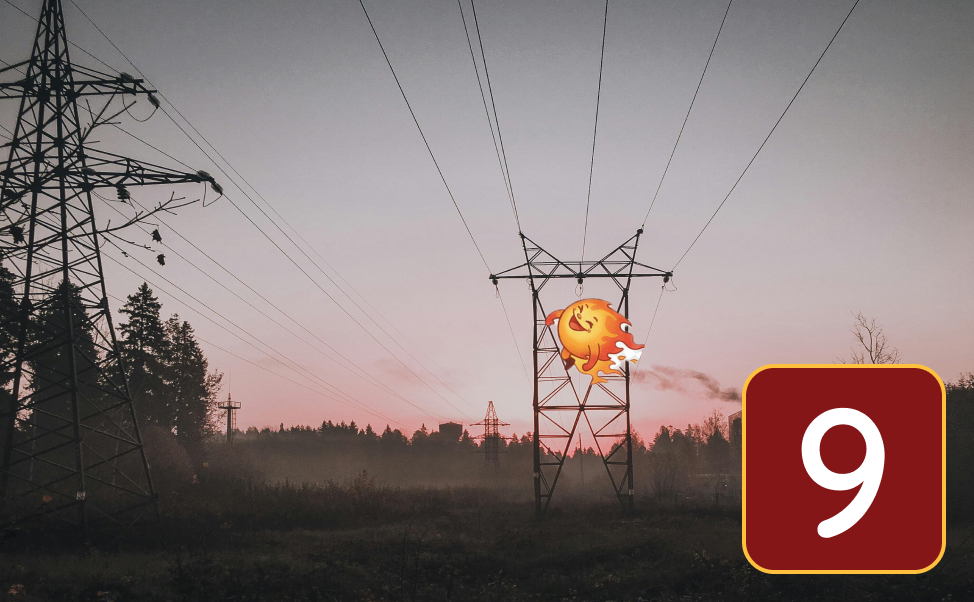
High above the ground, Zip Zap is one of billions of electrons racing through a high-voltage transmission line. Rumor has it that a wildfire is roaring nearby. Most electrons fear the heat, but not Zip Zap. She is a thrill-seeker. She is tired of the daily grind — running from the power plant to a toaster and back. She dreams of having a big breakout moment where she starts a fire or shocks someone.
Her strategy is to try to escape in this part of the race: Once she gets to the lower lines, they will be covered in plastic insulation. The high-voltage lines are bare metal, and the surrounding air itself is the insulation keeping her from veering off the track.
Zip Zap knows her race could end abruptly. If that’s going to happen, she hopes it’s because of what Californians call a Public Safety Power Shutdown (PSPS) — when the utility company cuts the flow before the fire arrives to thwart her ambition to create mayhem. If the flow is turned off at the source, the lines stay intact, and Zip Zap only has to suffer a long boring wait. If the fire hits first and snaps the line, the race track is destroyed, and her racing career is over.
But, so far, so good.
As the line gets close to the fire, the air turns into an oven. Zip Zap feels the metal wire beneath her begin to expand and stretch. This is thermal expansion. The once-tight wire sags and droops into a long, lazy curve. Zip Zap accelerates down the dip, watching the ground get tantalizingly close. The sagging line is now a major safety violation, and is inches away from touching dry brush, almost granting Zip Zap her wish of starting a fire. Almost.
Then comes the big wipeout! Thick soot and ash have coated the wire and, more importantly, the ceramic insulators. Usually, these insulators act like “DO NOT ENTER” signs, keeping Zip Zap and other electrons from running onto the wooden or metal poles. But the soot creates a dirty, conductive bridge over the ceramic.
Sparks fly in all directions. Electrons skitter onto the poles. It is a free-for-all, with every electron looking for a way out. Zip Zap tries to get into the fray, but momentum shoves her back onto the main line.
Disappointed, she almost misses her big break. The air around the wire is no longer clear; it is a smoky vortex filled with carbon and ash. This mixture is so intense that it ionizes, the smoke enables the very air between the wire and the trees to conduct electricity.
Seized by the attraction, Zip Zap joins a massive strike force of electrons. Together, they arc through the smoky haze like a localized bolt of lightning. They slam into a pine tree with a deafening crack. Bark explodes, branches ignite, and sparks spew over the forest floor.
Zip Zap’s wildest dream is fulfilled: She goes out in a spectacular flash of fire-starting glory rather than meekly slipping out a kitchen outlet.
What can you do?
BEFORE the fire: Ensure that trees are trimmed from around power lines. Utility companies often do this for free. Or hire professionals who have the expertise and equipment to work safely around electrical lines.
DURING the fire: Stay safe.
AFTER the fire (and at all other times): Report damage to power poles and downed lines. Stay clear of downed and low-hanging power lines — at least 30’ (about one city bus length)!
RIGHT NOW: Make a donation to help Creative Crisis Leadership turn complex science into simple, life-saving knowledge!
Sources
- Wildfire Reliability | California Public Utilities Commission
- Extreme Weather and Climate Vulnerabilities of the Electric Grid | Oak Ridge National Laboratory
- Knowing what to do around a downed power line could save your life | San Luis Valley REC
Stay Safe and Be Curious this Holiday Season!
Curiosity #8: Don’t Drink the Water, A Modern Horror Story
Photo from PxHere
In October 2017, the Tubbs wildfire raged through the city of Santa Rosa CA, destroying more than 3000 homes and other structures. A month later, residents began noticing unusual tastes and smells in their water.
The dedicated Santa Rosa Water department staff quickly leaped into action, testing samples. Within two days, they realized that the water was not safe to drink, even if boiled. They immediately changed “Boil Water” advisories to “Do Not Drink” advisories in select areas.
Unfortunately, people had been drinking contaminated water for a month.
The Bad Guy–VOCs
The Santa Rosa team found high levels of Volatile Organic Compounds (VOCs), especially benzene, in the water. These are toxic chemicals that can cause a range of health issues, including eye, nose, and throat irritation, headaches, dizziness, and nausea. Long-term exposure may lead to more serious problems, such as damage to the liver, kidneys, and central nervous system, and some VOCs are suspected or known to cause cancer.
The chemicals the team found had never before been seen in Santa Rosa water.
The Plot Thickens–A Toxic Cocktail with a Straw
Where did the VOCs come from?
When the Santa Rosa Wildfire raged, two things happened simultaneously:
- Extreme heat broke down plastic pipes in the plumbing: The ground got so hot that the High-Density Polyethylene (HDPE) and PVC pipes started breaking down, releasing VOCs into the water they were carrying. Add to this contaminated air, ash, and other debris, and you have a toxic cocktail brewing in the water.
- Loss of pressure sucked contaminated water back into main distribution lines: Fire hydrants were blasting thousands of gallons a minute. The pressure in the main lines dropped dramatically. The ensuing pressure vacuum back-siphoned this contaminated water, like sucking through a straw, back into the service and distribution main lines, contaminating them.
As clean water later traveled through the contaminated pipes, it picked up those contaminants and delivered them to households.
The Plot Twist–Don’t Boil the water
So, why not just boil the water? Boiling water for at least one minute (three minutes if you’re above 6500 feet of elevation) will kill bacteria that can make you sick.
Unfortunately, boiling water does not remove chemicals — like VOCs — that can also make us very sick. In fact, it can concentrate chemicals, and release them into the air as vapor, leading you to inhale them instead of drinking them.
Nor do most home water filters, like Brita, help out. They can reduce contaminants like chlorine and heavy metals, but they fall short when it comes to VOCs and other ingredients of wildfire’s toxic cocktail. Fortunately, there are more advanced filtration systems, such as reverse osmosis or specialized carbon block filters, that are designed to remove VOCs.
Epilogue–One Year Later
Santa Rosa did get benzene levels down and lifted the “Do Not Drink” advisories. But it took a whole year!
What can you do?
BEFORE the fire:
- Know where to get official local water status and advisories.
- Stock up on drinking water! Keep it in a place that minimizes heat should a wildfire come close.
DURING the fire:
- If you’re ready to go, and you feel you have time, shut off your home’s main water shut-off valve to prevent contaminated water from getting sucked back into your house pipes.
AFTER the fire:
- Do not drink the water from your tap until you know it is safe. Don’t use it to brush your teeth, wash fruit, or in other ways that might lead you to swallowing some.
- Check for “Boil Water” or “Do Not Drink” advisories from your local water board.
At any time, if you detect any strange flavor or scent in your tap water, stop drinking it immediately and alert your local officials!
RIGHT NOW: Make a donation to help Creative Crisis Leadership turn complex science into simple, life-saving knowledge!
Sources
- Post-Fire Water Quality Investigation: Analysis of Cause of Water Contamination | City of Santa Rosa
- Proctor, C. R., et al. (2020). Wildfire caused widespread drinking water distribution network contamination. AWWA Water Science.
- Address Contamination of Drinking Water Distribution Systems from Volatile Organic Compounds After Wildfires | U.S. EPA. (2021).
- California Wildfire Water Quality Impacts, Monitoring and mitigation | California Water Boards
- What Do Brita Pitchers Filter Out Of Water? | ETR Laboratories for Water and Environmental Testing
Stay Safe and Be Curious this Holiday Season!
Curiosity #7: Wildfire and The Melting Snow
Pop quiz! Let’s test your intuition about melting ice.
- Which melts faster? A block of ice that is:
- 1 foot square
- 1 inch square
- Which melts faster? A block of ice sitting in:
- Direct sunlight
- Deep shade
- Which melts faster? A block of ice wrapped in:
- Shiny white plastic
- Matte black plastic
If you answered B, A, B — congratulations! You’ve mastered the main ways wildfire accelerates snowmelt.
The Missing Shade
When a wildfire destroys the forest canopy, more snow reaches the ground — which sounds like a win. However, without the “umbrella” of tree cover to provide shade, that snow is exposed to the direct, punishing heat of the sun. Just like the block of ice in the sun, it stands no chance of lasting through the spring.
The Black Coating
Wildfire doesn’t just clear trees; it produces massive amounts of carbon (soot and ash). When these dark particles land on snow, they it becomes a giant heat-absorber. Just like wearing a black shirt on a hot day — or wrapping ice in black plastic — this “dirty” snow absorbs the sun’s energy instead of reflecting it, melting up to 57% faster than pristine white snow.
Why Should You Care?
If you live in the Western U.S., the mountain snowpack isn’t just for skiing — it’s your water supply. We rely on the snowpack to build up through the winter, and then slowly melt through the summer.
If the snowpack melts too quickly, we can experience two problems:
- Spring floods: When the snow melts fast, it’s like trying to fill a tea cup with a firehose. Rivers and reservoirs overflow, causing dangerous floods.
- Summer drought: Because the “ice block” melted too early in the spring, the water is long gone by the time the dry, hot months of July and August come around.
In short, the wildfire burns off anything providing shade and covers the ice block in black. As a consequence, it melts quickly, and the water spills across the table. By the time you’re thirsty, it’s all gone.
What can you do?
BEFORE the fire: Learn about and support sustainable forest and water management practices that protect the watershed and balance different needs.
DURING the fire: Stay safe!
AFTER the fire: Heed water usage restrictions and guidelines. Even if you see plenty of water now, there may be much less coming
RIGHT NOW: Make a donation to help Creative Crisis Leadership turn complex science into simple, life-saving knowledge!
Sources
- Wildfire impacts on western United States snowpacks | Frontiers in Water
- Wildfires Are Increasingly Burning California’s Snowy Landscapes and Colliding with Winter Droughts to Shrink California’s Snowpack | Desert Research Institute, February 2023
- Severe Summer Wildfires Are Impacting Western U.S. Mountain Snowpack During Winter and Spring | NOAA February 2023
Stay Safe and Be Curious this Holiday Season!